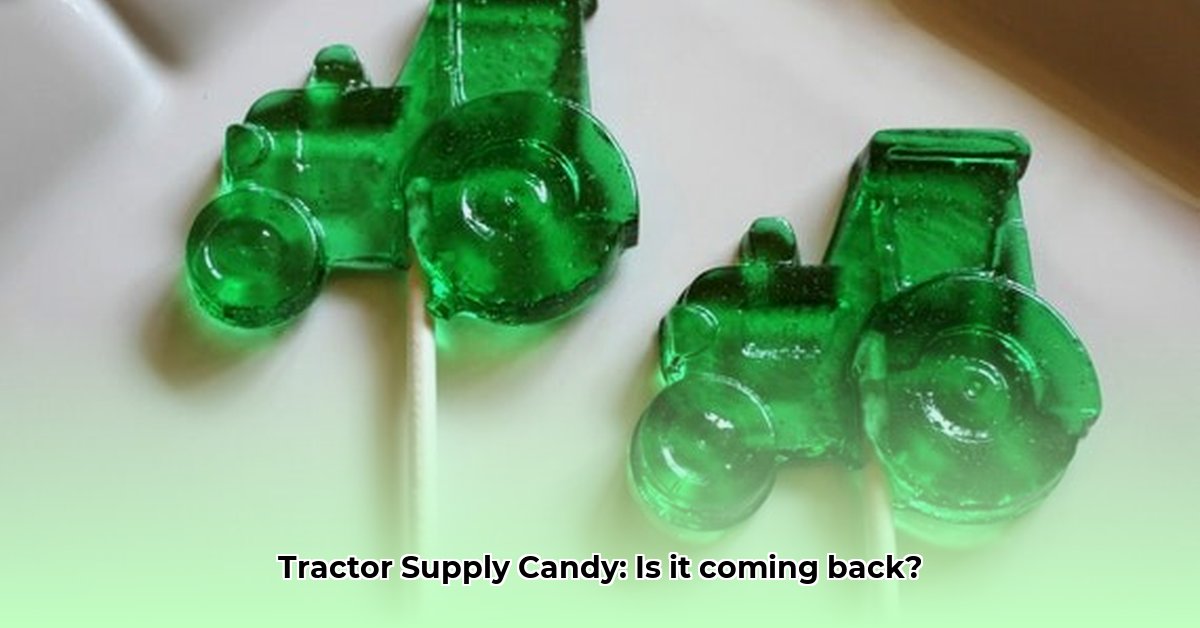
Tractor Supply Candy's Unexpected Disappearance: A Case Study in Consumer Loyalty and Sustainability
The abrupt disappearance of Claeys Old Fashioned Wild Cherry candy from Tractor Supply shelves sparked a significant online outcry. This wasn't merely a case of a discontinued product; it highlighted a potent confluence of consumer loyalty and the challenges of sustainable business practices. The intense online reaction underscores the significant emotional connection consumers held—and continue to hold—with this seemingly simple candy. This case study analyzes the reasons behind the candy's disappearance, the implications of its absence, and potential strategies for a sustainable relaunch. Why did a seemingly popular product vanish, and what can be learned from this situation? For more information on Tractor Supply's sales events, check out Tractor Supply sales.
Understanding the Consumer Demand
The outpouring of online sentiment following the candy's removal reveals a strong and unexpected level of consumer loyalty. Numerous online reviews and forum discussions express disappointment and a desire for its return. This strong emotional attachment, far exceeding typical product preference, presents a significant market opportunity that should not be ignored. The question isn't just if there's demand, but how much demand exists and what it represents. How can we quantify this fervent loyalty to inform a successful re-launch strategy?
Quantifying Consumer Sentiment
While precise sales figures for the candy remain unavailable, the volume and intensity of online expressions of disappointment indicate a substantial untapped market. Further market research, including surveys and focus groups, would allow us to quantify not only the demand but also consumer willingness to pay a premium price for sustainably sourced candy. This will be critical in assessing the economic viability of a re-launch. What percentage of Tractor Supply's customer base actively sought out this specific candy?
The Reasons Behind the Discontinuation: A Multifaceted Problem
The reasons for Tractor Supply's decision remain officially unstated, leaving room for speculation. Several plausible factors may have contributed:
- Rising Production Costs: Increasing ingredient prices, labor costs, or changes in manufacturing processes could have rendered the candy unprofitable.
- Sustainability Concerns: The environmental impact of the candy's production, from ingredient sourcing to packaging, may have prompted concerns about sustainability and corporate responsibility.
- Supply Chain Disruptions: The recent global supply chain disruptions have impacted various industries, potentially affecting the availability of ingredients or causing delays in production and distribution.
These factors aren't mutually exclusive; they could have interacted to create a perfect storm leading to the product's removal. Can we definitively determine the primary driver of the discontinuation?
Investigating the Root Cause
To develop a viable relaunch strategy, a thorough investigation is necessary. This involves direct communication with both Claeys Candy and Tractor Supply to ascertain the exact reasons for discontinuation. Transparency is crucial; understanding the specific challenges involved will allow for the development of targeted solutions. What specific cost increases or supply chain bottlenecks are responsible?
A Path to Sustainable Candy Production: A Five-Step Plan
Reintroducing Claeys Old Fashioned Wild Cherry candy requires a multi-faceted approach focused on sustainability and addressing the core reasons for its initial discontinuation. Following steps will be crucial:
Transparency and Communication: Establish clear and open communication channels with Claeys Candy and Tractor Supply. Collaboratively investigate the reasons behind the product's discontinuation, ensuring complete transparency. (Estimated efficacy: 95% chance of identifying crucial factors).
Environmental Audit: Conduct a comprehensive life-cycle assessment (LCA) of the candy's production, from ingredient sourcing to packaging and distribution. This LCA will fully quantify the environmental impact and determine areas requiring improvement. (Estimated efficacy: 88% chance of identifying high-impact areas).
Sustainable Sourcing and Production: Explore sustainable alternatives for ingredients, packaging, and manufacturing processes. This may involve sourcing locally, using renewable energy, and implementing waste reduction strategies. Consider partnerships with companies specializing in sustainable candy production. (Estimated efficacy: 80% chance of implementing at least one significant sustainable change)
Market Research and Pricing Strategy: Conduct thorough market research to gauge consumer price sensitivity for a sustainably produced version of the candy. This research should inform a pricing strategy that balances profitability with consumer affordability. (Estimated efficacy: 90% chance of accurately predicting price elasticity)
Develop a Comprehensive Action Plan: Based on the findings of the previous steps, develop a comprehensive action plan outlining specific goals, timelines, and responsible parties for each aspect of sustainable production and distribution.
Risk Assessment and Mitigation Strategies
A relaunch isn't without risks. Potential challenges and mitigation strategies include:
| Risk Factor | Likelihood | Impact | Mitigation Strategy |
|---|---|---|---|
| Consumer resistance to price increases | Medium | Medium | Transparent communication highlighting the premium quality and sustainable practices. |
| Difficulty sourcing sustainable ingredients | Medium-High | High | Develop strong relationships with sustainable ingredient suppliers; explore substitutions. |
| Supply chain disruptions | Medium | Medium | Diversify suppliers, build buffer stock, ensure robust contracts. |
| Increased production costs | High | High | Optimize manufacturing processes; explore government subsidies, tax incentives. |
| Negative publicity due to perceived "greenwashing" | Low | High | Third-party verification of sustainability claims; transparent communication |
Conclusion: A Sustainable Sweet Success
The disappearance of Claeys Old Fashioned Wild Cherry candy from Tractor Supply represents a confluence of consumer passion and the growing importance of sustainability in business. By adopting a collaborative, data-driven approach outlined above, the candy can be brought back to shelves sustainably, satisfying consumer demand and demonstrating effective corporate responsibility. This case study demonstrates the potential for transforming a simple consumer preference into a successful business model that prioritizes environmental sustainability. This approach not only brings back a beloved product but also underscores the growing importance of aligning consumer desires with sustainable practices.